
Staff can see both tabs, but topping up, paying an invoice, changing payment
methods and the apply-credits setting are limited to the owner and admins.
Invoices
Upcoming invoice is the current billing period’s charges, with its line count and the period it covers. Past invoices lists each one by invoice number with its status, billing period, due date and amount, and selecting a row expands its line items. An invoice that is still open carries a Pay invoice button on its row, which charges your default payment method. Its status reads Overdue once the due date has passed. New payment method adds a credit or debit card. Each saved method’s menu holds Set default, which is the one every charge uses, and Delete. The payment methods card sits on both tabs.Credits
Credits are prepaid balance. Shipping labels bought through Itemstores are paid for with them. Credits cannot be refunded or transferred. Top-up center adds credit as $20, $50 or $100, or select Other for any amount from $1.00. Continue to payment charges your default payment method. Paying by bank account takes one to three business days to clear, and the credit is added once your bank confirms it.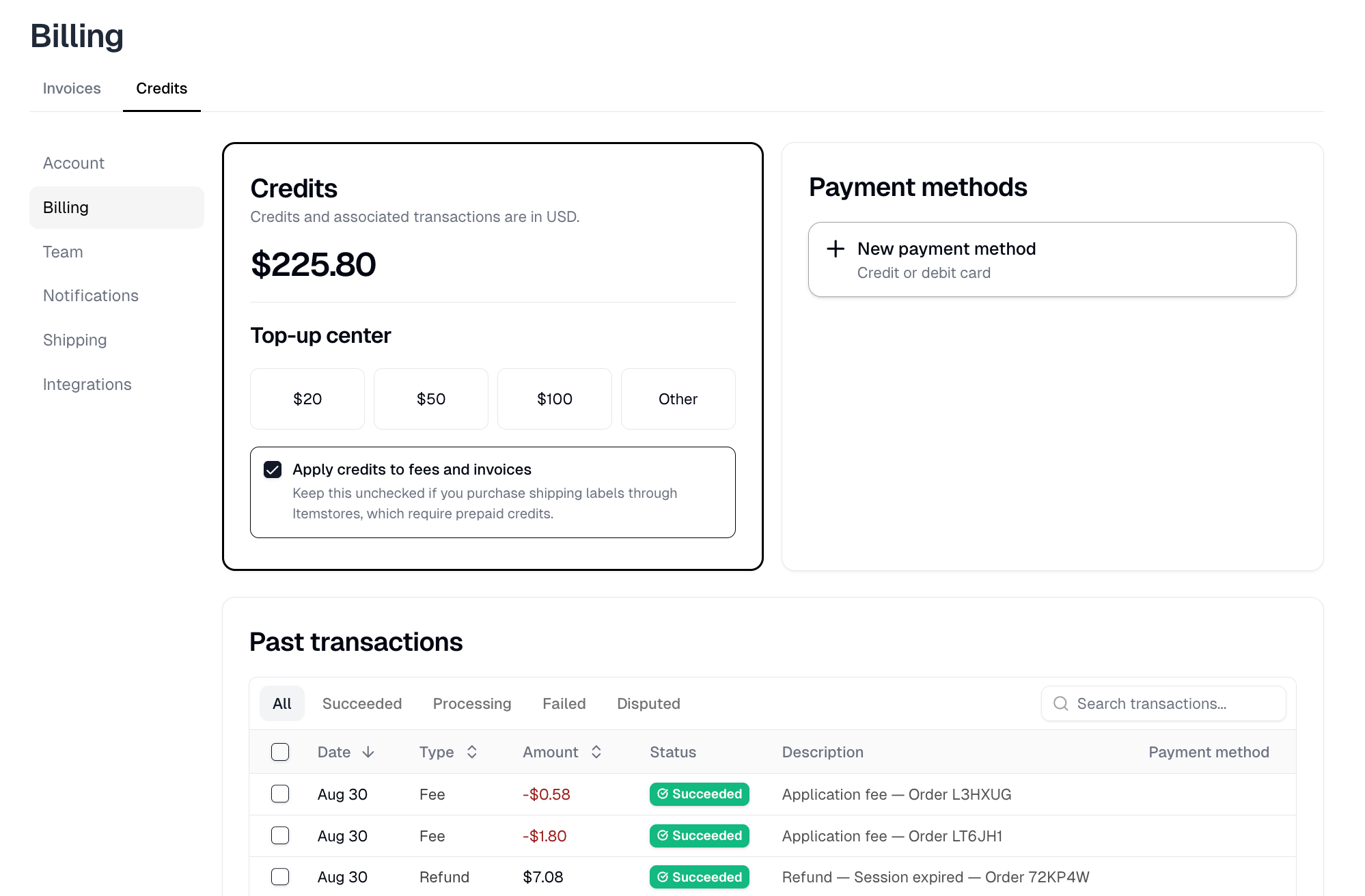
Past transactions
Every credit movement, searchable and filterable by All, Succeeded, Processing, Failed or Disputed.
Invoice rows, and the transaction-fee rows under Fee, are what Apply credits
to fees and invoices produces. A voided shipping label appears here as a
refund against the purchase.